
Market Analysis · July 13, 2026
Two dates matter this week if you’re watching gold: Monday July 14 and Tuesday July 15. That’s when the US releases its most important monthly inflation readings — CPI (consumer prices) and PPI (producer prices). And the forecasts are surprisingly soft.
What’s Being Released?
Across six data points, the picture is consistent: US inflation is cooling broadly.
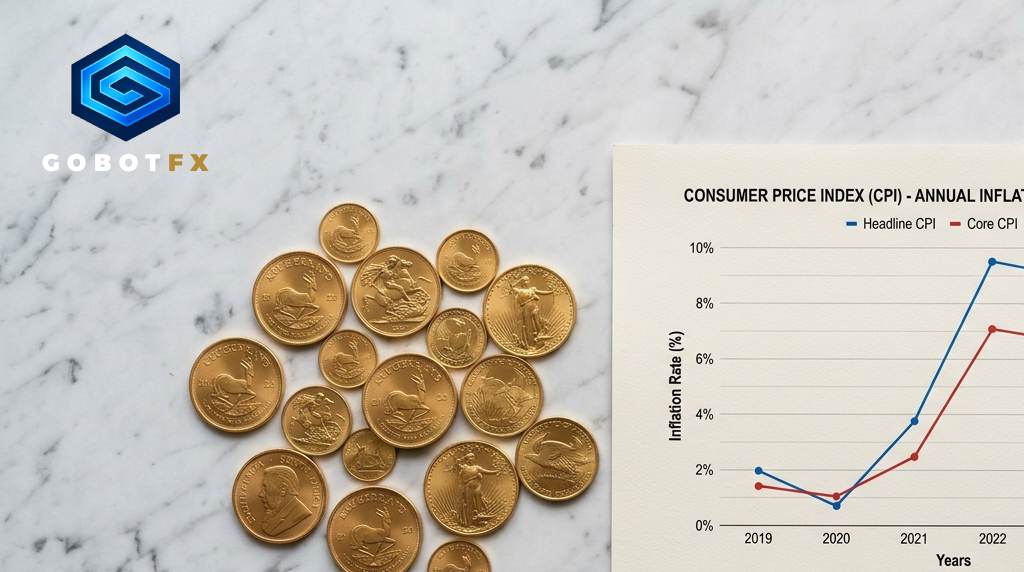
CPI — Released July 14: Monthly consumer prices are forecast at -0.1%, meaning goods actually got cheaper in June compared to May. A negative monthly print is rare and signals meaningful disinflation. Annual CPI is expected to fall from 4.2% to 3.8%.
PPI — Released July 15: Producer prices — what manufacturers pay for inputs — are forecast at 0.0%, down sharply from 1.1% last month. This is the biggest single-month drop in the batch and arguably the most important signal, since PPI typically leads CPI by one to two months.
Why Is PPI Falling So Fast?
The June Iran–US ceasefire is the most likely culprit. When Hormuz reopened, oil dropped from near $100/barrel toward the $85–90 range. Energy costs feed into almost every production process — when oil falls, PPI follows.
What Does This Mean for Gold?
The conventional read is: lower inflation → stronger USD → lower gold. That logic is sound in normal conditions. But markets right now aren’t entirely normal.
Here’s the counterintuitive scenario: if CPI prints negative as forecast, markets will immediately price in earlier Fed rate cuts → US Treasury yields fall → gold rallies. This “good inflation news = buy gold” dynamic is well-established in 2025–2026 markets where rate expectations drive everything.
There’s also a structural floor under gold that gets overlooked: even with Hormuz open, global oil inventories remain at their lowest since 2003. Energy-driven inflation could return in Q3, and smart money knows this — meaning gold has fundamental support even when near-term data looks bearish for it.
Most Likely Scenario
If actuals come in at or below forecasts (inflation cools as expected): gold dips slightly for a day or two, then recovers as rate-cut expectations firm up.
If actuals come in above forecasts (inflation stickier than expected): gold rallies immediately on the “inflation isn’t beaten yet” narrative.
Most likely outcome: prints close to consensus, gold trades in a tight range on July 14–15, then drifts higher into the weekend as markets refocus on the bigger picture — oil inventory recovery, Iran deal durability, and the Fed’s next move.
Two Times to Watch
July 14 at 8:30 AM ET (CPI) and July 15 at 8:30 AM ET (PPI). These are the two moments this week when gold could move the most.
This article is for informational purposes only and does not constitute investment advice.