
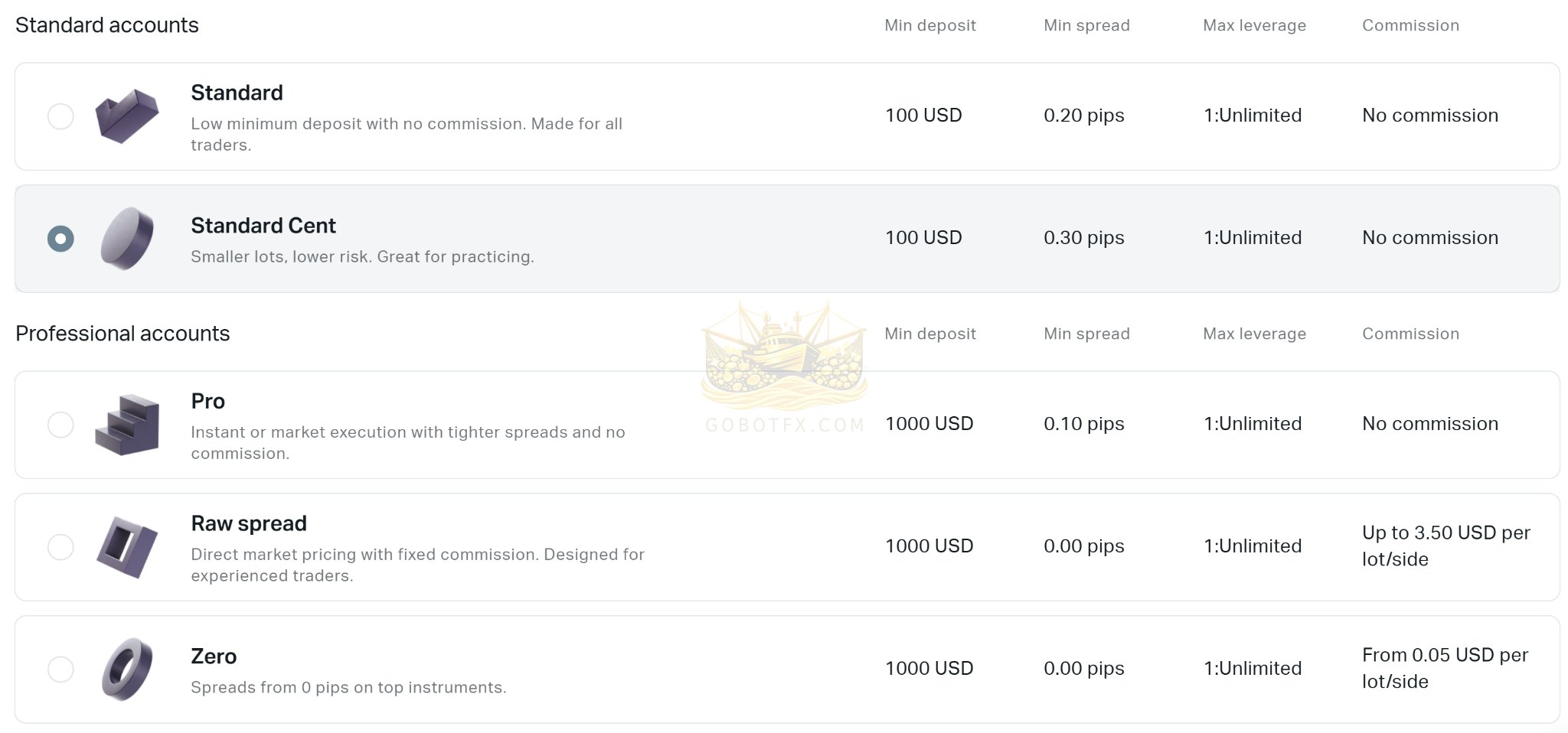
A complete beginner-to-advanced guide to Exness account types. Compare Standard, Standard Cent, Pro, Raw Spread, and Zero accounts, spreads, leverage, commissions, and choose the best one for your trading strategy.
Introduction: Why Choosing the Right Exness Account Matters
When starting your trading journey, selecting the right account type is one of the most important decisions you’ll make. The structure of spreads, commissions, leverage, and minimum deposit directly affects your:
- Risk exposure
- Trading cost
- Strategy performance
- Psychological comfort
In this guide, we’ll break down all major account types offered by Exness, including:
- Standard
- Standard Cent
- Pro
- Raw Spread
- Zero
By the end of this article, you’ll know exactly which account suits your style — whether you’re a beginner, scalper, swing trader, or algorithmic trader.
Overview of Exness Account Categories
Exness divides its accounts into two main groups:
1️⃣ Standard Accounts
Designed for beginners and intermediate traders:
- Standard
- Standard Cent
2️⃣ Professional Accounts
Designed for experienced traders:
- Pro
- Raw Spread
- Zero
Let’s break each one down.
1. Exness Standard Account
Key Features:
- Minimum deposit: From $100
- Spread: From 0.2 pips
- Commission: No commission
- Leverage: Up to unlimited (depending on conditions)
Who Is It For?
The Standard account is ideal for:
- Beginners
- Casual traders
- Swing traders
- Traders who prefer simple cost structure
Advantages
✔ No commission
✔ Low minimum deposit
✔ Easy to manage
✔ Suitable for manual trading
Disadvantages
✖ Spread is slightly higher than professional accounts
Best Strategy Fit
- Swing trading
- Intraday trading
- Light scalping
If you want a simple setup without worrying about commission calculations, this is your safest choice.
2. Exness Standard Cent Account
Key Features:
- Minimum deposit: From $100
- Spread: From 0.3 pips
- Commission: No commission
- Lot size: Smaller (cent lots)
What Makes It Special?
The Cent account allows you to trade using smaller lot sizes. Your balance is displayed in cents instead of dollars.
Example:
- Deposit $100
- Your MT4/MT5 shows 10,000 cents
Who Is It For?
✔ Absolute beginners
✔ Traders testing new strategies
✔ EA (bot) testing
✔ Low-risk learning
Advantages
✔ Lower risk exposure
✔ Great for practice
✔ Real-market environment
Disadvantages
✖ Slightly wider spread than Standard
Best Strategy Fit
- Learning trading
- Testing Expert Advisors (EA)
- Micro risk management
If you’re new and afraid of blowing your account, this is the safest real-money option.
3. Exness Pro Account
Key Features:
- Minimum deposit: From $1,000
- Spread: From 0.1 pips
- Commission: No commission
- Execution: Instant & Market execution
Who Is It For?
✔ Experienced traders
✔ High-volume traders
✔ Scalpers
✔ Traders who need tighter spreads
Advantages
✔ Tighter spread
✔ No commission
✔ Professional execution
Disadvantages
✖ Higher minimum deposit
Best Strategy Fit
- Scalping
- News trading
- High-frequency intraday trading
If you want low spreads without paying commission, Pro is a strong balance between Standard and Raw Spread.
4. Exness Raw Spread Account
Key Features:
- Minimum deposit: From $1,000
- Spread: From 0.0 pips
- Commission: Up to $3.5 per lot per side
- Market execution
What Does “Raw Spread” Mean?
You receive real market pricing directly from liquidity providers. The spread can be as low as 0.0 pips, but you pay commission.
Cost Structure Example
For 1 lot EURUSD:
- Spread: 0.0–0.2 pips
- Commission: ~$7 round turn
Who Is It For?
✔ Professional traders
✔ Scalpers
✔ Algorithmic traders
✔ Traders using tight stop-loss strategies
Advantages
✔ Extremely low spread
✔ Best for precision trading
✔ Transparent cost
Disadvantages
✖ Commission fee
✖ Higher deposit requirement
Best Strategy Fit
- High-frequency scalping
- Grid systems
- Arbitrage strategies
- Advanced EA trading
If your strategy depends heavily on tight spreads, Raw Spread is usually the best option.
5. Exness Zero Account
Key Features:
- Minimum deposit: From $1,000
- Spread: From 0.0 pips (on top instruments)
- Commission: From $0.05 per lot per side
- Professional-level execution
What Makes Zero Unique?
The Zero account offers 0 spread on selected instruments for most of the trading day.
Who Is It For?
✔ News traders
✔ Short-term scalpers
✔ High-volume traders
Advantages
✔ Zero spread on major instruments
✔ Predictable cost
✔ Competitive commission
Disadvantages
✖ Commission still applies
✖ Requires trading knowledge
Best Strategy Fit
- News breakout trading
- Fast execution scalping
- Large lot trading
Which Exness Account Should You Choose?
| Trader Type | Recommended Account |
|---|---|
| Beginner | Standard Cent |
| Casual Trader | Standard |
| Intermediate Trader | Pro |
| Scalper | Raw Spread / Zero |
| EA Trader | Raw Spread |
| News Trader | Zero |
Spread vs Commission: What Is Actually Cheaper?
Many traders misunderstand this.
Example Comparison (1 lot EURUSD):
Standard:
- Spread: 1 pip
- Cost: ~$10
Raw Spread:
- Spread: 0.1 pip
- Commission: $7
- Total: ~$8
For high-volume traders, Raw Spread is often cheaper.
For low-volume traders, Standard is simpler and sufficient.
Is Unlimited Leverage Safe?
Exness offers very high leverage options.
⚠️ But remember:
- Higher leverage = Higher risk
- It does NOT increase your profit probability
- It only increases exposure
Smart traders focus on risk management, not leverage.
Final Recommendation (Practical Advice)
If you’re:
🔰 New → Start with Standard Cent
📈 Growing → Move to Standard
⚡ Serious trader → Upgrade to Pro
🤖 Running bots or scalping → Use Raw Spread
🚀 Trading news aggressively → Choose Zero
Don’t overcomplicate things. Your trading system matters more than your account type.
Frequently Asked Questions
Is Exness good for beginners?
Yes. The Standard and Standard Cent accounts are beginner-friendly.
Which Exness account has the lowest spread?
Raw Spread and Zero accounts.
Is commission better than spread?
For high-volume traders, yes. For small traders, usually no.
Can I switch account types?
Yes, you can open multiple accounts under the same client area.
Conclusion
Choosing the right Exness account type can significantly impact your profitability and trading psychology.
The key takeaway:
- Beginners should prioritize safety and learning.
- Professionals should prioritize cost efficiency and execution quality.
- Always calculate total trading cost (spread + commission).
Trading success doesn’t come from the account type alone — it comes from discipline, risk management, and consistency.